An Innovative Approach to the Care System in PDET Municipalities
Originally published at ideaspaz.org (in Spanish)
The implementation of the Care Policy in the municipalities most affected by violence — the PDETs — can be a great opportunity to rebuild social fabric and trust. There, care has become the center of community life.
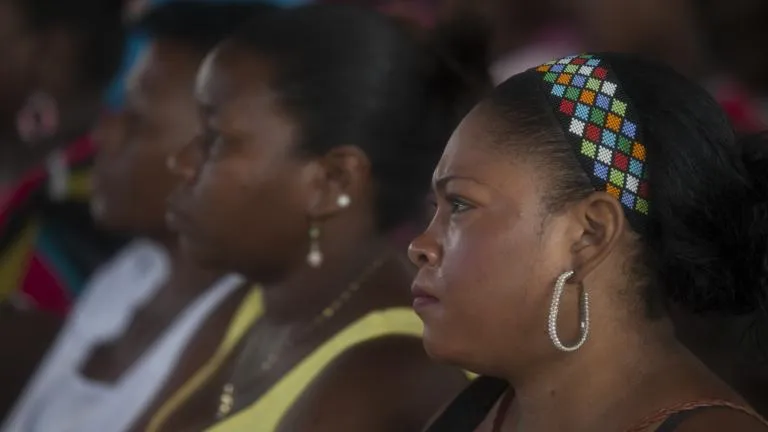
About 16 million people in Colombia require special care, and around 7 million women are unpaid caregivers. The National Government has the task of defining the policy to build the National Care System, which must incorporate territorial, ethnic, and gender approaches.
For municipalities with Territorial-Focused Development Programs (PDET), it will be essential to take into account their particularities, given the impacts of the armed conflict in these territories. Particularities such as gender-based violence and the fact that the main caregivers are women, as well as the impact these environments have on the mental health of the population.
It is also important to incorporate the lessons and initiatives that local communities have built from the Peace Agreement, and those that have emerged at the community planning level through the PATRs, the PDET roadmap. The implementation of the Care Policy in PDET municipalities can be a great opportunity to rebuild social fabric and trust.
Due to the limited supply of care services by the State and the low institutional and administrative capacity in PDET regions, care has been self-managed and has become the center of community life. This is vitally important, given the impacts these places have suffered from violence: one of the forms of resistance of some communities has been to create collective and community care strategies.
The implementation of the Care System will also need to articulate with the references and care practices for the community, the territory, and the environment that exist in PDET zones, as well as actively integrate the participation of local actors linked to care. It is essential to start from existing processes, from the knowledge that communities have about their territories and what they have woven around care.
Women dedicate 5 and a half more hours per day to unpaid activities than men in rural areas. In urban areas, this gap is around four hours.
One of the challenges this system will face at the territorial level will be reducing unpaid care work time for women and promoting a redistribution of these tasks. According to 2020-2021 data from the Time Use Survey (ENUT), from DANE, although rural women spend less time than those living in cities on paid work activities, the gap in care dedication between men and women is greater in rural areas.
There, women dedicate five and a half more hours per day to unpaid activities than men, while in urban areas this gap is around four hours. As various reports have noted, it is important to highlight that, in PDET municipalities, care tasks assigned to women have been extended by demands and imposition of armed actors, which has generated a work and emotional burden for them.
There is much to learn about community care and territories. There are experiences from organizations and individuals focused on these tasks, such as the Interethnic Network of Midwives of Chocó or the Association of Women Peace Signatories Las Manuelitas, in Cauca. Also initiatives like JOSA Constructoras de Paz, which is part of the Arhuaco community and focuses on serving children who do not have access to education. Nor can we forget the work of community mothers, who have contributed to other women being able to reduce the time they dedicate to care tasks.
Most of these initiatives are developed and sustained by women; therefore, it will be essential to transform the naturalization of their caregiving role and promote the redistribution and remuneration of this work as dignified labor that requires fair conditions, such as salary payments and social security guarantees.
A cultural shift
Transforming the role of caregivers requires a cultural change strategy as the axis of the Care System: the patriarchal and sexist belief structure is what maintains and reproduces the sexual division of labor and assigns women the role of caregivers and reproductive work.
In the Gender Norms Survey conducted by the USAID Generando Equidad program in educational institutions (see results), it is evident that in the imaginations of children and adolescents, the belief that women should be in charge of domestic and care roles remains naturalized.
That is why one of the allies in this transformation is the education sector. From there, with children and adolescents, it is possible to begin to position a change in the belief system that promotes the existence of gender roles and stereotypes. This cultural change must aim to eliminate racist and xenophobic practices and discourses, especially considering that a significant portion of women who perform unpaid and paid care work belong to ethnic groups or are migrants.
The implementation of the Care System in PDET regions is an opportunity to articulate national technical capabilities and knowledge with the wisdom and processes that communities, especially women, have created and managed.
In PDET regions, it will be key to implement mobile care strategies and services, especially for remote rural areas. Of course, this implies a high commitment from the State in economic and human resources and security guarantees. Such an investment would help reduce gender gaps and access to the labor market between rural and urban areas and, therefore, would bring social and economic benefits.
Given the absence of State care services in many PDET territories, women in these communities have devised strategies to accompany and provide some of these services, which are rarely recognized as work. Therefore, the implementation of the Care System, in articulation with local care models, must socially reposition the work of women caregivers, and this means recognizing the role they play in their communities and the risks involved in moving through areas where armed groups are present. So bringing the Care System to the local level also means creating measures to protect their integrity and guarantee their well-being.
The implementation of the Care System in PDET regions is an opportunity to articulate national technical capabilities and knowledge with the wisdom, lessons, processes, and knowledge that communities, especially women, have created and managed.
Perhaps the Care System will open a door to recognize and value care work with dignity and social justice, and thus achieve living in harmony with the environment, the territories, the diversity of worldviews, and everything that is part of those who have historically cared for and sustained us.